BUY ONLINE

CHOOSE FROM ONE OF OUR ONLINE OUTLETS.

OR

BUY ON OUR ONLINE BOUTIQUE

Preparing Your Dog for Fall

Welcome to Fall!  Along with the crisp air and fallen leaves come some things that could be dangerous to your pet. 

Brianne DiSylvester’s article 11 Pet Dangers to Avoid During the Fall and Winter Months gives a brief explanation of things you should look out for.  The 11 dangers are:

  1. Antifreeze
  2. Allergies
  3. Arthritis
  4. Mushrooms
  5. Compost pile
  6. Rodenticides
  7. Candy
  8. Thanksgiving
  9. Cold Weather
  10. Decorations
  11. Plant

Check out her article here:  http://www.organicauthority.com/pets/11-fall-pet-dangers-to-avoid.html

As mentioned in DiSylvester’s article pets suffer from allergies.  Some symptoms include watery eyes and sneezing just like humans.  But more commonly pets react to allergies by scratching – this can cause serious health problems.  The most common pet allergies during fall and winter include ragweed and dust mites.  For more information on pet allergies check this out:  http://www.drsfostersmith.com/pic/article.cfm?aid=75       http://www.canadianpetconnection.com/autumn-allergy-troubleshooting-season/

With fewer day light hours as the fall changes to winter you might find yourself exercising your pet in the dark.  Make sure you and Rover stay visible by using reflective gear and a flashlight.  As the season gets colder, ice and the salt used to melt it may become a problem.  Be careful on slippery surfaces and try to avoid areas where salt has been used as a de-icer.  For more on exercising your dog during the fall and winter check out:    http://www.cesarsway.com/dog-care/dog-health/Dogs-Adapting-to-Autumn

It might look like Fido is shedding more than normal.  During the late fall to early winter dogs shed their short, light summer coats in favour of their long, thick winter coats.  Make sure to brush your dog regularly.  If you notice that your dog is shedding quite heavily it might be a sign of problems such as skin allergies, parasites, malnutrition or other health issues.  If you notice heavy shedding contact your vet.   For more information on fall shedding check out:    http://www.veterinarypartner.com/Content.plx?A=1548&S=1

Lastly, you’ll need to consider changing your pet’s diet.  Before you make any changes consider your pet’s age, weight, and level of exercise.  Less exercise means your dog won’t need as many calories – feed your dog smaller portions.  If your dog spends a lot of time outside you might need to feed your pooch larger portions – your dog burns more calories in the cold.  For more information on fall and winter pet diets check out the following:    http://www.veterinarypartner.com/Content.plx?A=1548&S=1

If your dog sleeps outside make sure their shelter is cold/wet weather ready.  Also, make sure your dog has access to unfrozen water.

Fall and winter can be hard on older pets.  If you live in a place where the fall is particularly cold/wet/windy you can help out your pet by getting them some clothes.  If you exercise you dog outside during bad weather a sweater or boots will help keep you dog warm, and can prevent injuries and illness.

Cat and Dog Households – Introducing your new cat to your resident dog

Cats and dogs have a reputation for not getting along.  But the truth is it’s a lot cats and dogs are best friends.  According to many sources a successful cat/dog households are dependent on the introduction between the pets.  If you’re considering getting a cat and you already have a dog you’ll want to do some research to make sure you’re prepared.

Overview

Here’s a quick article to give you an overview of the introduction process:

http://cats.about.com/od/amyshojai/a/introduce-cat-and-dog.htm

Rules

If you’re introducing a new cat into a dog household here are some rules to consider for their first meeting:

  • Supervision – make sure you watch your pets as they get to know one another
  • Make sure the cat has a place to hide – somewhere off the ground will make the cat feel secure and less likely to act out against the dog
  • Make sure the dog is restrained – dogs like to play by chasing, make sure that you can easily restrain your pup by a leash if he gets too excited
  • Consider baby gates – these can be used to separate your pets and make sure they have their own space

Other Factors

There are many other factors to consider before you introduce your new cat to your dog.  These include:

  • The age and temperament of both pets
  • Don’t force interaction
  • Know your pets’ pasts
  • Prep your dog for change and have a plan for your dog’s reaction
  • When to get help – if your new cat is not settling in after a few days or you notice a change in your dog’s behaviour contact your vet to get some advice
  • Reinforcement – use praise and treats to reinforce good behaviours

Resources

For more information about introducing a new cat to your resident dog check out these links:

Do you have a cat and a dog?  What did you do when you introduced them?  Let us know on our Facebook page J

Road Trip Tips:

  • If you have a pet there’s a lot to consider when you go on vacation.  Today we’re going to focus on bringing your pup on road trips.
  • It’s the middle of the summer and lots of people are planning road trips.  If you’re going to take Rover with you you’ll need to plan for the following:
  • First things first, make sure your destination takes pets.  Here’s a hotel site that specializes in finding pet-friendly hotels:  http://www.officialpethotels.com/?refclickid=1385~G~&adposition=1s1&device=c&gclid=COOu9ozc07gCFa9fQgod4koAkw#axzz2aOrQXtsO
  • Before you book your stay here are some questions you might want to ask: http://www.petfriendly.ca/pet-travel/pet-policy.php#.UfXaMW0UVy0
  • Before you hop in the car and set off on your journey you’ll want to make sure Rover is up to date on his shots and medications.
  • Make sure you pack everything you’ll need for Rover.  Here is a checklist you might find helpful: http://www.petfriendly.ca/checklist.php#.UfXcVW0UVy0
  • Be prepared for the car ride.  You’ll need to have plenty of water for your pooch and plan to make frequent rest stops along your way.  It’s important to exercise your pooch before the long journey – your pet will be more likely to rest during the trip.  Also, feed your pooch early.  Rover will be less likely to be sick.  For more pet friendly road trip tips check out http://www.petfriendly.ca/pet-travel/road-trip.php#.UfXfRm0UVy0
  • Consider putting your pooch in a crate for the journey.  A crate can prevent a pooch from getting hurt.  If you don’t like the idea of a crate you may want to try a doggy seat belt.  The seat belt makes sure Rover is secure in the car. 

Here are a few more tips that will help you prepare for your road trip:

  • Trial run – take a few shorter drives with your pooch to see how he/she reacts
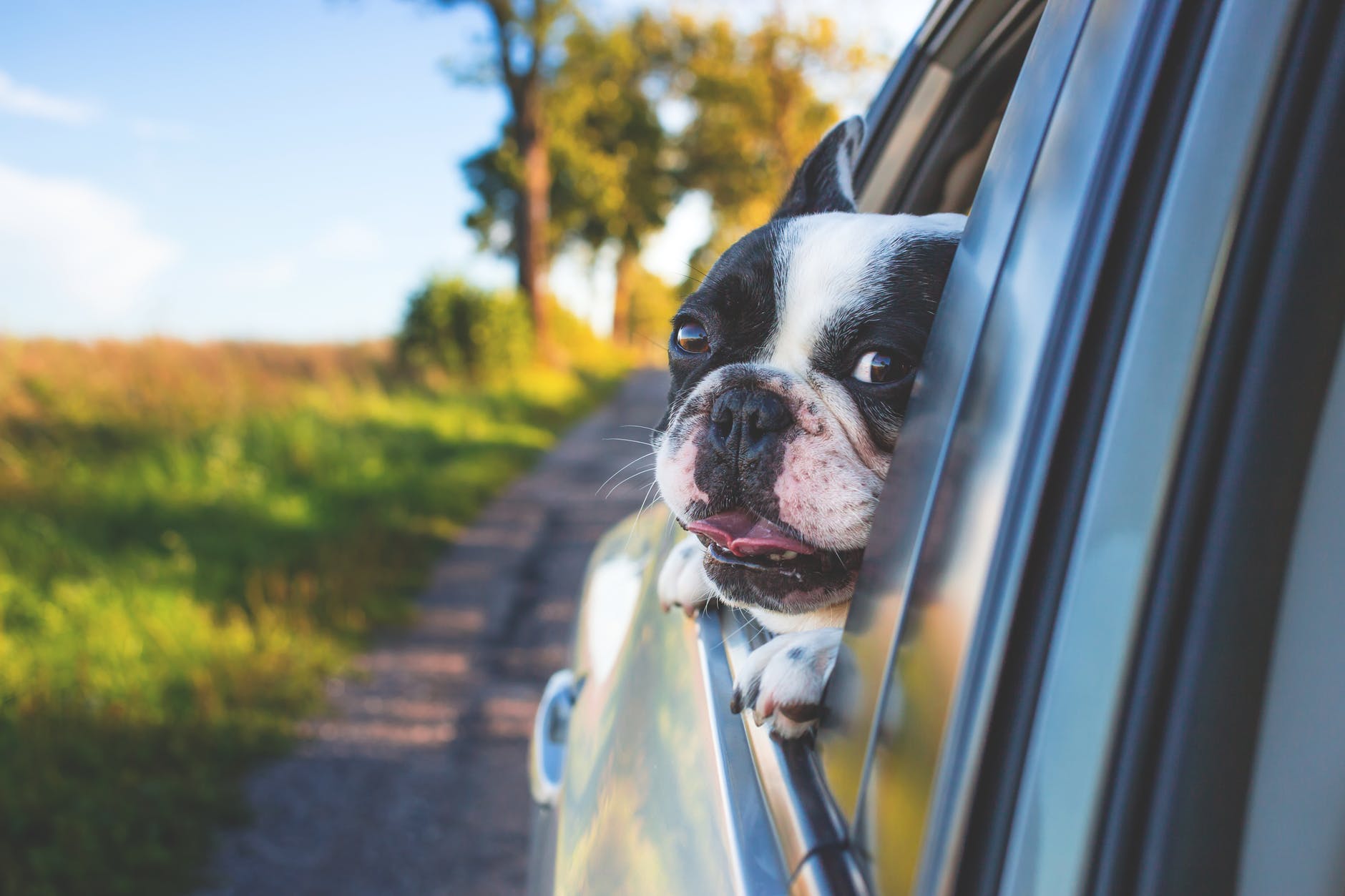
  • Don’t let your dog stick his/her head out the window – this may cause lung infections, ear damage, or other injuries
  • Second collar tag – add a second tag to your dog’s collar with the address of the place you’re staying
  • Don’t leave your dog in the car unattended
  • Use a window shade if your vehicles windows aren’t tinted

Note: above tips adapted from Mother Nature Network’s Laura Moss and PETA’s travel trips

For more tips you might want to check out the following websites

http://www.peta.org/living/companion-animals/tips-for-traveling-with-dogs.aspx

http://www.petfriendly.ca/pet-travel/#.UfXozm0UVy0

"Best dog poop bags ever and so friendly for the environment!"

Jonathan Y., Google Reviews

POOP BAG DEALS!

Sign up to get the latest coupons, offers and more...